

Written by
Jason Glass and Nathan MartinezReading time: 7 minutes
August 12, 2026
Axial Flux Technology Evolves Hybrid Design for Heavy-Duty Trucks
High torque density, short axial length, and fast transient response are making this technology ideal for hybrid architectures
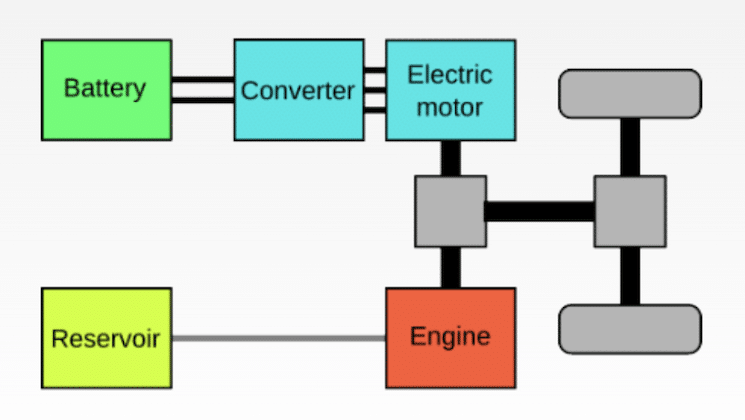
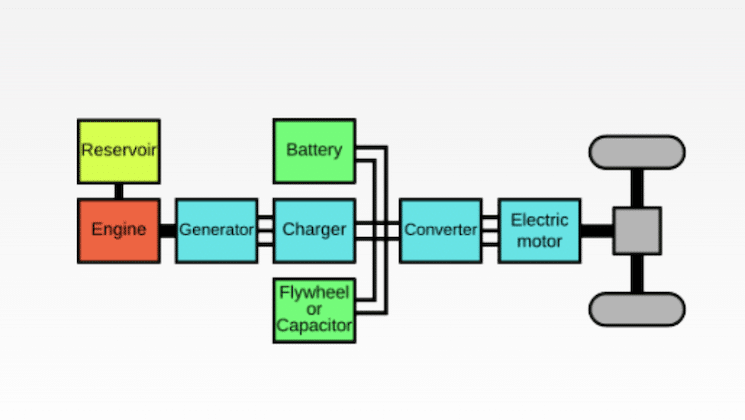
Hybridization in heavy-duty trucks and other commercial vehicles is no longer a single-path exercise. Original equipment manufacturers (OEMs) and system integrators are evaluating parallel, series/extended-range, and power-split (combines series and parallel hybrid systems) architectures to:
- Reduce fuel consumption
- Improve transient performance
- Enable low-speed electric operation
- Create more flexible power management
In that design space, the electric motor becomes a primary architectural decision—not simply an add-on component. This is where axial flux motors have gained traction.
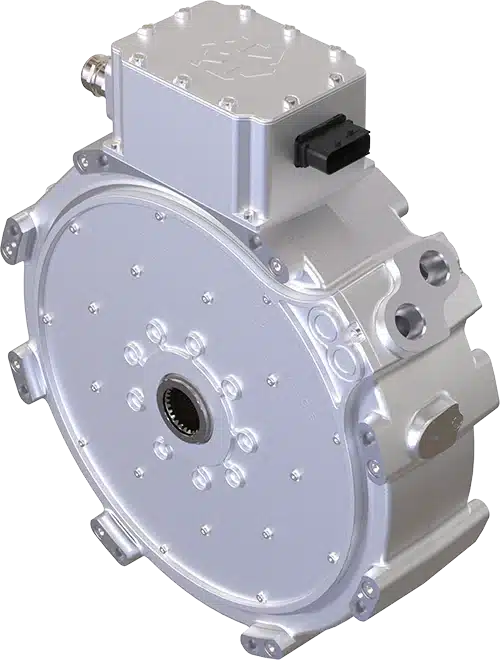
Compared with radial flux motors, axial flux designs concentrate electromagnetic interaction across a shorter axial package. The result is a form factor that delivers high torque density in a thin, disc-like construction. For hybrid applications, this is critical because inserting meaningful electric capability into a driveline already crowded by engines, clutches, couplers, gearsets, cooling components, and structural constraints can be a challenge.
The value proposition of axial flux motors is especially strong for large heavy-duty trucks. In these applications, engine operating cycles are highly dynamic, available space is limited, and the duty cycle rewards immediate torque. In these applications, the axial flux technology is not merely smaller. It can alter how a hybrid system is packaged, calibrated, and ultimately deployed.
Packaging Changes the Hybrid Equation
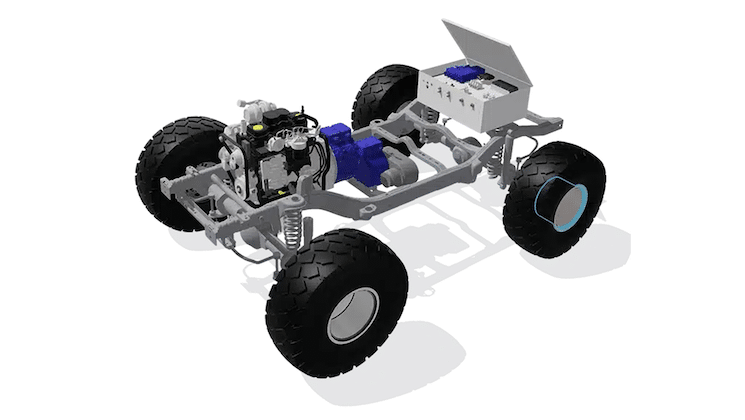
In many heavy-duty truck hybrid programs, packaging is the first constraint. Engineers often must situate the motor between the internal combustion engine and transmission, integrate it into a power-generation or accessory drive system, or fit it within a chassis envelope already constrained by aftertreatment, cooling modules, frame geometry, and cab packaging. A shorter machine unlocks architectures that would otherwise require extensive redesign.
This is one reason axial flux topologies are compelling. Their short axial length helps engineers integrate electric assist without substantially stretching the driveline. In a parallel hybrid configuration, this can simplify installation between the engine and transmission or within other constrained coupling points. In Class 8 trucks, where frame rails, exhaust aftertreatment, cooling hardware, battery enclosures, and driveline packaging all compete for space, this compact geometry can translate directly into easier integration and fewer secondary compromises.
The benefit is not only dimensional. Higher torque density enables more assist or regenerative capability from a compact machine. In practical terms, that can mean stronger launch support, better load acceptance, and more effective recapture of braking or deceleration energy without forcing a large motor package into an already crowded layout.
Immediate Torque When Duty Cycle Demands
Hybrid large heavy-duty trucks often operate in regimes dominated by transients: launch events at high gross vehicle weight, grade changes, repeated stop-start activity in urban or port environments, and engine speed excursions under variable load. In these conditions, the motor must respond quickly and repeatedly. Engineering evaluations of axial flux motors consistently show that they deliver torque immediately and spin up quickly, traits that support their use in systems requiring fast torque fill or rapid power delivery.
That fast response has larger system implications. In a downsized or efficiency-optimized engine strategy, the electric motor:
- Fills torque deficits during tip-in
- Reduce the need to operate the engine in less efficient transient regions
- With speed matching, smooths the interaction between combustion and electric propulsion sources
For linehaul, regional haul, and vocational truck applications, this improves launch feel, gradeability, and overall duty-cycle efficiency. In series hybrid or generator-focused architectures, the same responsiveness can also improve speed control and load-following behavior.
All this matters because hybrid system value is increasingly judged by emissions or fuel-use metrics and by how well the machine performs real work. If the electric subsystem helps the vehicle or motor respond more quickly to operator demand, maintain performance under fluctuating loads and recover energy more effectively, the business case becomes easy to justify.
Engine Coupling, Torsional Dynamics, & Durability
No discussion of hybrid system integration is complete without addressing durability at the interface of the combustion engine and electric motor. This is particularly important in diesel-based systems, where torque pulsations and firing events cause transient loads on splines, shafts, and couplers.
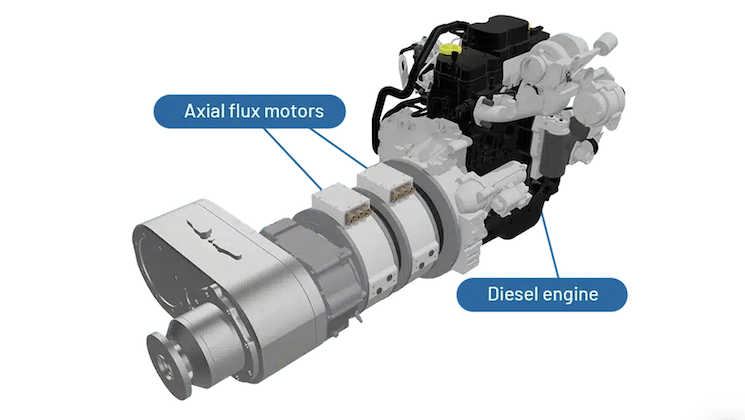
One of the more useful engineering considerations in hybrid system design is the need to treat all system components—not just the motor—as a durability-critical subsystem. In many configurations, spline shaft torque transfer remains a practical solution, combined with careful shaft design and, where appropriate, torsional couplers sized to absorb momentary torque spikes generated by diesel firing. This approach helps:
- Isolate torque ripple
- Reduce peak shock loading
- Extend the life of interconnecting shafts and splines
For engineers developing parallel hybrid architectures, this is a key reminder: Motor selection cannot be separated from mechanical interface design. The shaft’s inner diameter, coupler characteristics, expected combustion torque pulses, and the electric motor’s torque capability all interact.
An axial flux motor may provide the packaging and torque-density required. However, the surrounding components must be engineered for long-term fatigue resistance under real duty cycles.
In practice, that means hybrid integration should include:
- Early torsional analysis
- Careful matching of the coupler stiffness and damping
- Component sizing based on nominal torque and peak events, start-stop cycles, and combustion irregularities
These considerations are especially important in medium- and heavy-duty diesel hybrids, where the durability bar is high, and field failure costs are unforgiving.
Cooling Strategy Remains Application-Specific
As with any high-specific-output electric motor, thermal management of axial flux motors remains central to extracting sustained performance from the platform. Current implementations are often liquid-cooled, and cooling strategy remains a factor in deciding if an application is a good fit for a specific topology, particularly where high rpm, high continuous power, or unusual mounting orientations are involved.
The cooling system decision is not a trivial issue for heavy-duty truck systems. Duty cycles include prolonged high-load operation at low road speeds, long grades, high ambient temperatures, and variable airflow conditions. Under these circumstances, the ability to reject heat consistently becomes as important as peak torque.
For hybrid designers, the implication is straightforward: Axial flux motors deliver strong packaging and performance advantages, but thermal system design must be integrated early, with attention to:
- Coolant routing
- Heat exchanger sizing
- Control strategy
- Continuous-duty derating behavior
Thermal constraints also shape application boundaries. A motor that is ideal for a short duration assist function may require a different cooling approach when used for sustained generation, traction support, or repeated high-power regenerative events. That makes application engineering—not just catalog specification—critical to successful deployment.
Beyond Propulsion: Generation & Auxiliary Power
Another notable advantage of axial flux motors is their suitability for power generation. In hybrid heavy-duty truck systems, that versatility can be valuable. The same machine that contributes propulsion torque also supports on-board generation, range extension, or electrically driven auxiliary systems.
Generator use is a strong fit when the operating speed range aligns well with engine speed. In practical hybrid truck terms, that opens opportunities for:
- Engine-mounted generation systems
- Hotel-load support
- Electrified accessories
- Distributed power architectures that reduce dependence on mechanically driven auxiliaries
Compact size again becomes an enabler: A machine with high power density can deliver substantial power generation capability without the packaging challenges of implementing a larger, radial flux motor.
This generator role is especially relevant as heavy-duty trucks adopt more electrically actuated auxiliaries, and as commercial vehicle architectures evolve toward higher voltage subsystems. A compact machine capable of both motoring and generating can help reduce component count while increasing system flexibility.
Manufacturing & Component Quality Determine Success
Axial flux motors offer system-level advantages, but those benefits depend on sound execution in the motor’s core components, including:
- Rotor design
- Rotor integrity at speed
- Stator manufacturing quality
- Winding execution
Those factors are significant in high-rpm applications, where rotor containment, balance, material selection, and assembly precision directly affect durability and performance.
For heavy-duty truck engineers and designers, this reinforces an important reality: The promise of axial flux motors must be assessed in production terms, not just in concept drawings or peak-output charts. These factors influence whether a motor succeeds in a commercial-duty environment:
- Manufacturing repeatability
- Cooling implementation
- Noise, vibration, and harshness characteristics
- Serviceability
- Supply-chain readiness
This is especially true for hybrid systems, which often subject components to repeated load reversals, regenerative events, thermal cycling, and long operating hours. The more compact the machine, the less margin exists for manufacturing variation or poorly managed heat paths. As a result, motor quality and application engineering remain inseparable.
Why Axial Flux Motors Are a Gamechanger
Calling any technology a gamechanger risks oversimplifying a complex engineering landscape. Axial flux motors are not a universal replacement for radial flux machines. They also do not eliminate the hard work of hybrid calibration, cooling design, or durability validation. However, in large heavy-duty truck hybrid systems, they do offer characteristics that can shift design tradeoffs in meaningful ways.
The most important of those characteristics are compact axial packaging, high torque density, and rapid transient response. Together, they allow engineers to:
- Place electric motors where they previously may not have fit
- Deliver assist and regeneration where duty cycles benefit most
- Configure hybrid architectures with greater flexibility
When combined with robust torsional isolation, appropriate cooling, and disciplined mechanical integration, these advantages translate into more practical and more capable hybrid systems.
For an industry under pressure to reduce fuel consumption and emissions without sacrificing productivity, these capabilities are significant. Hybridization succeeds when it solves real, machine-level problems: Space claim, response time, energy recovery, engine load management, and system flexibility. Axial flux motors are increasingly relevant because they address several problems simultaneously. This is why they matter. Not because they are novel, but because in the constrained, duty-intensive world of heavy-duty trucks, they give designers and engineers a new way to make hybrid systems work in the real world.
Subscribe to our newsletter
Power your decisions with expert electrification and hybrid system insights. Subscribe today.
By subscribing you agree with our privacy policy
Featured
Market Update: Infrastructure, Financing, & Scale Set the Pace for Electrification
Some signals from IAA Transportation and InnoTrans 2026 indicate that depot power, financing, and service
Read More
Blog Posts
Market Update: Infrastructure, Financing, & Scale Set the Pace for Electrification
Market Update: Truck Manufacturers Seek Complete Transport & Energy Systems
Market Update: Shifts from Components to Complete Systems
Turntide Showcases Compact, High-Torque Axial Flux Motor Systems for Commercial Vehicles at IAA Transportation