

Written by
Matrishvan RavalReading time: 4 minutes
September 2, 2026
Axial Flux Motors’ New Industrial Value
Data centers, compressors, backup power systems, and other critical industrial applications are creating new opportunities for axial flux motor technology.
Axial flux motors are most often discussed in the context of electric and hybrid vehicles and other mobile equipment, where high torque density, compact packaging, and fast response are clear advantages. However, the same characteristics that make this technology valuable in transport are also relevant in a broader set of industrial applications.
As facilities look for ways to improve efficiency, increase uptime, and support more dynamic power and cooling requirements, axial flux motors are beginning to move beyond propulsion into the systems that keep critical processes in operation. Therefore, some original equipment manufacturers (OEMs) are selecting these motors to help industrial facilities in their goals.
Why Industrial OEMs Are Looking Beyond Induction Motors
Many process and infrastructure systems still rely on induction motors. These motors are well understood and widely available, but they introduce efficiency losses, electrical lag, control lag, and packaging penalties in continuous applications or those that respond to changing loads. In high-duty-cycle environments, even small efficiency gains translate into meaningful energy savings because motor-driven equipment often operates around the clock.
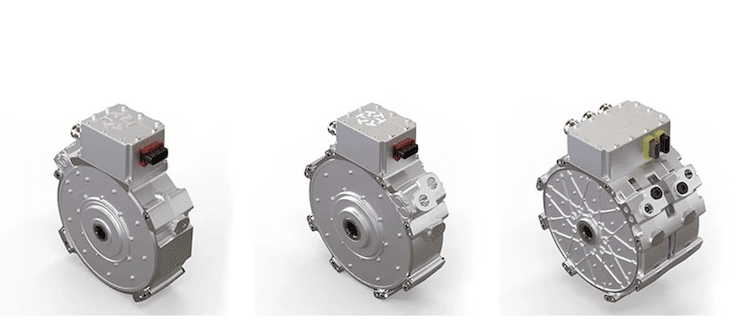
An axial flux motor is a permanent magnet synchronous motor with efficiencies of 96% or higher. When paired with a tuned inverter, it reduces the electrical and control lag associated with induction motors while supporting faster torque response and higher operation efficiency. In some industrial comparisons, an efficiently cooled axial flux motor is also significantly smaller than a comparable industrial induction motor. This reduces the size and weight penalty that often comes with higher power requirements.
Reliability, Availability, & Durability
For many industrial operations, the value proposition is not only the smaller size. In plants, data centers, and other critical facilities, unplanned downtime is expensive and operationally disruptive. If a critical process fails in some facilities, the costs could be in the millions. A motor intended for these environments must be designed for long life, high availability, and durable operation under the duty cycle of the specific application.
That starts with understanding the failure modes. Design failure mode and effects analysis and process failure mode and effects analysis help identify risks such as:
- Insulation failure
- Bearing wear
- Shaft stress
- Oher conditions that could affect motor life
Motors are then engineered around those risks using certified insulation systems, hardened shafts, high-quality bearings, and use-case-specific life analysis. Durability testing across different duty cycles and operating conditions also helps build the statistical basis for reliability expectations.
Data Center Cooling & Power Resilience
AI data centers are creating new load profiles for electrical and thermal systems. Cooling demand rises quickly when computational workloads spike, which means fans, pumps, and other cooling system components need motors that operate efficiently at variable loads while also absorbing short-term peaks. Axial flux motors support:
- Variable-speed operation
- High peak torque
- Compact integration for cooling towers, pumps, and related systems
Higher voltage architectures are another area of interest. Moving toward 800-volt-DC systems reduce current for a given power level, which lowers ohmic losses and improves overall system efficiency. In some applications, a single, more powerful motor may also optimize efficiency compared with an array of smaller motors, depending on the cooling architecture and system design.

Data centers also require backup power and brownout resilience. Larger axial flux motor configurations can be used in generator applications, while flywheel-based systems represent another emerging example. In a flywheel energy storage system, a large rotor is brought up to speed and kept spinning in a low-loss environment, then used to generate power during short dips in supply. These applications remain specialized, but they illustrate how axial flux machines contribute beyond traction.
Compressors & Process Industry Equipment
Industrial air compressors are another practical example. Compressor motors often operate for long periods and must withstand demanding mechanical conditions. In some compressor duty cycles, pulsations create resonant operating points that contribute to:
- Shaft wear
- Bearing damage
- Other premature failure
By analyzing the application, the motor, and the expected operating profile together, axial flux motor designs can be validated for shaft life and resilience under those conditions.
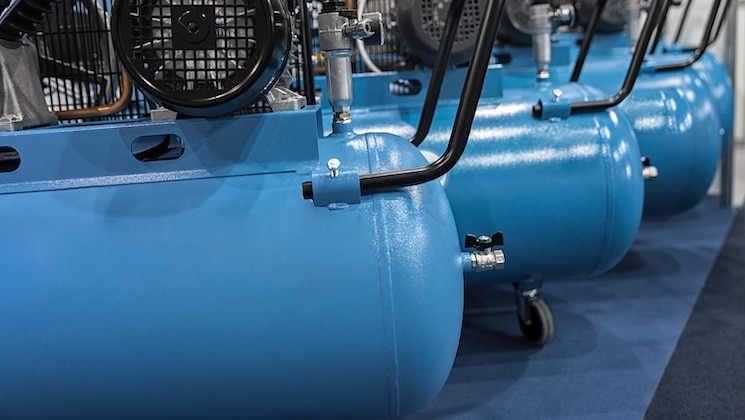
The same principles apply to other industrial systems that move air, liquid, or process media indirectly:
- Fans
- Blowers
- Chillers
- Refrigeration compressors
- Air compressors
- Cooling water pumps
- Process water pumps
- Critical process pumps
- HVAC systems
- Clean-room infrastructure
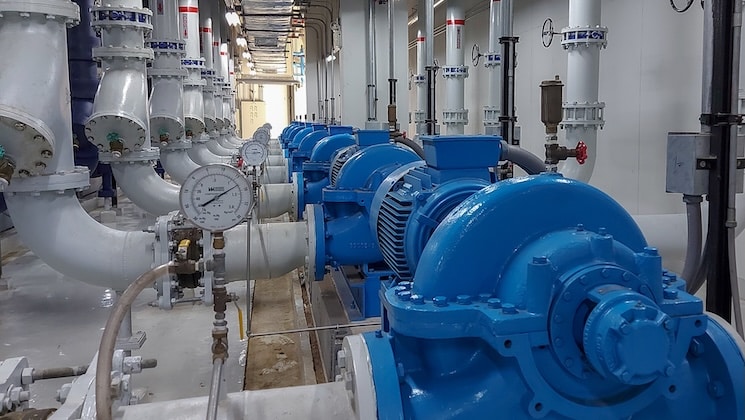
These are not propulsion applications, but they depend on motor-driven equipment to keep production, cooling, safety, and environmental systems operational.
Matching the Motor to the Mission
Not every industrial application needs axial flux technology. In many facilities, space is less constrained than it is in a vehicle. But where efficiency, response, reliability, and availability are central to the business case, the technology becomes compelling. The goal is to match motor performance, inverter capability, cooling design, and duty-cycle requirements to the exact system need.
That system-level approach is important because industrial customers are not simply buying a motor. They want to reduce energy use, avoid unscheduled downtime, meet peak load requirements, and keep critical systems operational. Axial flux motors give engineers another option when conventional induction motor architecture limits efficiency, response, availability, or design flexibility.
New Phase of Adoption
Axial flux motors are moving into a new phase of adoption. Their role in electric and hybrid vehicles remains important, but emerging industrial applications show how the same benefits apply to static and infrastructure applications. In data centers, compressors, cooling systems, backup generation, and other critical equipment, compact, high-efficiency motors with strong transient response and application-specific durability allow engineers to rethink what motor-driven systems deliver.
Subscribe to our newsletter
Power your decisions with expert electrification and hybrid system insights. Subscribe today.
By subscribing you agree with our privacy policy
Featured
Axial Flux Motors’ New Industrial Value
Data centers, compressors, backup power systems, and other critical industrial applications are creating new opportunities
Read More
Blog Posts
Turntide Axial Flux Motors and Inverters Propel Fering’s Long-Range, Hybrid Vehicle
Market Update: Scale Takes the Lead in Commercial EVs
Market Update: Architecture Drives Electric & Hybrid System Advantage
Market Update: Systems Thinking Drives Heavy-Duty EV Momentum