

Written by
Steve HornyakReading time: 4 minutes
January 21, 2026
The Path to Rail Decarbonization: How Tri-Mode Trains Transform the Economics of Electrification
This technology, combining electric, battery, and diesel power, offers a pragmatic solution by reducing infrastructure costs and decreasing emissions.
The railway industry faces a critical challenge: how to decarbonize our networks affordably and pragmatically. While full electrification remains the gold standard for intensive main lines, the economics of electrifying every mile of track have proven prohibitive, leading to project cancellations and scaled-back ambitions across Europe and North America.
Having spent years developing advanced electric motors, power electronics, and energy storage solutions for anything that moves, we’ve watched this challenge play out in real-time. The answer isn’t necessarily choosing between diesel and electric. We can meet in the middle with hybrid solutions that deliver the environmental benefits of electrification at a fraction of the cost.
The Hidden Cost Driver: Bridges & Tunnels
Recent analysis from the Railway Industry Association reveals a sobering reality: structural clearance works, primarily modifying bridges and tunnels to accommodate overhead line equipment can represent 30% to 40% of total electrification project costs. This accounts for hundreds of millions of pounds on major programs.
The Great Western Electrification Programme in the U.K. provides a cautionary tale. Initial estimates of £1 billion ballooned to £2.8 billion, leading to project descoping and cancellation of electrification to Oxford, Bristol, and Swansea. Much of this cost escalation stemmed from the complexity and expense of bridge reconstructions and tunnel modifications needed to achieve the required electrical clearances. This is perhaps an unsurprising outcome when putting 21st Century electrification onto 170-year-old bridges. Many unforeseen things can happen.
Network Rail’s own engineering assessments confirm that avoiding or reducing civil engineering work for clearances is the single biggest opportunity to reduce electrification costs. At Cardiff Intersection Bridge, for example, conventional reconstruction was estimated at £40 to £50 million, with track lowering alternatives still costing £15 million to £20 million, all for a single structure just 400 meters from the scheme’s terminus.
Tri-Mode Technology: The Practical Solution
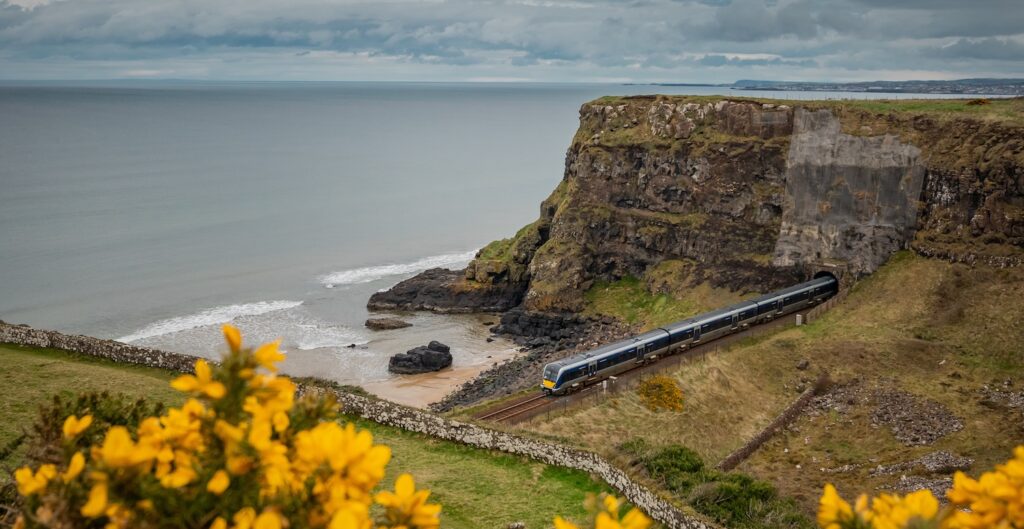
This is where tri-mode trains become transformative. By combining overhead electric, diesel, and battery power in a single platform, these trains eliminate the need to electrify the most expensive sections of a route. In addition, tri-mode trains reduce emissions.
The technology works elegantly: Trains draw power from overhead lines on electrified sections, switch to battery power through non-electrified gaps (particularly over bridges, under low bridges, and through tunnels where clearance modifications would be prohibitively expensive), and use diesel as a backup for longer non-electrified stretches. Batteries recharge automatically during electric operation with overhead infrastructure and regenerative braking, making the system seamless for operators and passengers.
A hybrid train can achieve 50% reductions in carbon emissions and fuel consumption compared to diesel equivalents while arriving and departing stations entirely on battery power, eliminating local emissions and noise pollution where it matters most.
The Economic Transformation
The financial implications are substantial. By strategically leaving gaps in overhead line equipment at bridges, tunnels, and other constrained locations, rail operators can:
- Reduce capital costs by 30% to 40% by avoiding the most expensive civil engineering works
- Accelerate project delivery by eliminating complex possession requirements for major structural modifications
- Enable the electrification of previously uneconomic routes where full infrastructure costs couldn’t be justified
- Maintain operational flexibility with trains that can serve electrified and non-electrified portions of the network
Recent research from the University of Texas, commissioned by the U.S. Federal Railroad Administration, quantified that using electric locomotives with “last mile batteries” could eliminate $150 million in civil engineering costs on a long double-track electrification project by avoiding the need to raise bridges or undercut tunnels at low-clearance zones.
Beyond Cost: The Environmental Case
Some critics argue that anything less than full electrification compromises environmental goals. The data tells a different story. Academic research on discontinuous electrification shows that 50% route coverage can deliver 54% operational carbon dioxide reductions—nearly the same environmental benefit as full electrification—at dramatically lower capital cost and embodied carbon from infrastructure construction.
This matters because infrastructure has a carbon footprint, too. Every bridge reconstruction, tunnel modification, and major civil work carries significant embodied emissions. By avoiding these interventions, tri-mode solutions can achieve net carbon reductions faster than delayed or cancelled full electrification programs.
A Pragmatic Path Forward
The railway industry shouldn’t view tri-mode technology as a compromise—it’s a strategic enabler that makes decarbonization economically feasible. By focusing limited capital on electrifying the straightforward sections of routes and using hybrid technology for the complicated bits, operators can:
- Start delivering emission reductions immediately rather than waiting years for full electrification
- Build business cases that survive budget pressures by demonstrating reasonable capital requirements
- Create a foundation for future expansion as costs come down and technology improves
- Maintain service quality without operational compromises
The Great Western experience taught the industry that feast or famine electrification programs driven by political cycles don’t work. We need sustained, rolling programs that progressively decarbonize the network using the most cost-effective tools available. Tri-mode technology deserves to be in that toolkit.
Looking Ahead
Rail electrification isn’t dead, it’s evolving. The future belongs to operators who embrace a portfolio approach: full electrification for high-intensity corridors where the business case is clear and tri-mode solutions for challenging routes with tunnels and bridges, and battery-electric for the lightest-used branches.
The path to rail decarbonization runs through smart technology deployment, not ideological purity. Tri-mode trains offer railways a way to move forward on emissions reduction without the paralyzing costs that have stalled too many electrification programs. That’s not a compromise—that’s smart engineering in service of both environmental and economic sustainability.
Subscribe to our newsletter
Power your decisions with expert electrification and hybrid system insights. Subscribe today.
By subscribing you agree with our privacy policy
Featured
Q&A: 2026 Trends & Expectations
During the January 2026 webinar, industry experts discussed last year and the expectations for 2026.
Read More
Blog Posts
CONEXPO 2026 Trends: Hybrid Systems Are the Future in the Construction Industry
Powering India: Minda Corporation & Turntide to Form a Joint Venture
Turntide to Unveil Proven, Scalable Axial Flux EDU During CONEXPO
Turntide Axial Flux EDU Validated Under Extremes at King of the Hammers