

Written by
Max CarruthersReading time: 2 minutes
July 1, 2026
How Fleets Can Reduce Fuel Costs Without Replacing Every Vehicle
Axial flux motors speed matched to the engine provide the ideal, efficient operation for a hybrid system.
For most fleet operators, the priority is straightforward: control operating costs, manage fuel spend and maximize the life of existing equipment. With unpredictable fuel costs and rising equipment costs, switching to battery-electric vehicles (BEV) doesn’t always align with operational realities.
While BEVs will continue to play an important role in some applications, infrastructure limitations, vehicle requirements and capital constraints can make a full transition difficult. As a result, many fleets are taking a fresh look at hybrid architectures that can improve economics and lower tailpipe emissions without fundamentally changing how vehicles are deployed, serviced or operated.
What Could Make Hybridization More Effective This Time?
Hybrid systems have existed for years, but not all hybrid architectures deliver the same results. One lesson the industry has learned is that the motor matters more than originally expected. Early hybrid systems demonstrated the potential of electrification, but many were built around electric motors (typically radial flux) and combustion engines that were optimized for different operating conditions. As a result, the system could not always capture the full efficiency benefits that hybridization was designed to deliver.
Many combustion engines achieve peak efficiency within a relatively narrow operating range. Hybrid systems perform best when the motor and engine are speed matched correctly, allowing the engine to spend more time operating where it is most efficient while the electric motor handles transient torque demands such as launch, grade changes, and stop-and-go operation.
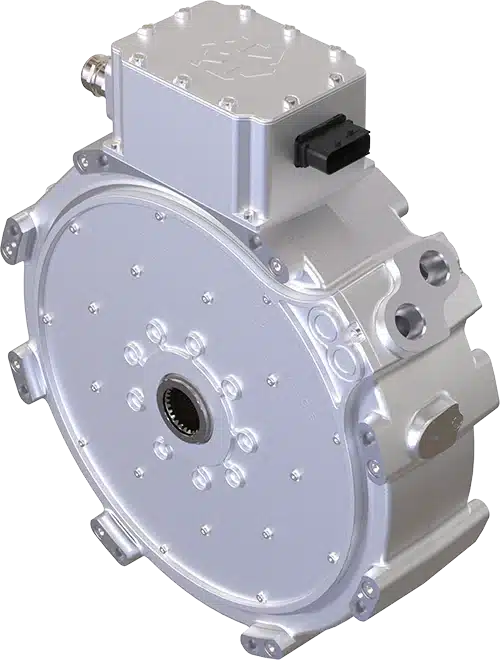
In commercial vehicles, packaging constraints are often one of the biggest barriers to electrification. Unlike many conventional electric motor designs, axial flux motors deliver high torque at lower rotational speeds, allowing them to align more naturally with the operating characteristics of commercial engines. Some axial flux motors can be speed matched to their engines. And their compact form factor allows them to be integrated into existing space-constrained platforms.
For fleets, that means more opportunities to modernize existing equipment with electrified technologies, improve vehicle productivity, and reduce fuel consumption without replacing vehicles or dramatically changing operating practices. The benefits extend beyond fuel economy to include reduced maintenance, improved uptime, and longer equipment life.
Some hybrid architectures, including series hybrid or extended-range electric vehicle designs, allow the engine to spend more time operating at its best efficiency point while the electric system manages vehicle propulsion. This approach is particularly well-suited for medium-duty delivery vehicles, vocational trucks, and off-highway equipment, where stop-and-go duty cycles create opportunities to recover and reuse energy that would otherwise be lost. In applications that stop, start, and change loads throughout the day, those efficiency gains add up quickly.
Bottomline
For fleet operators, the opportunity is not simply to lower fuel consumption. It is to create a more efficient path forward that balances operating costs, asset life, environmental requirements, and long-term business needs. As fleets evaluate the next generation of powertrain technologies, the conversation is becoming less about choosing a winner and more about identifying the right technology mix for the job.
Subscribe to our newsletter
Power your decisions with expert electrification and hybrid system insights. Subscribe today.
By subscribing you agree with our privacy policy
Featured
Market Update: Infrastructure, Financing, & Scale Set the Pace for Electrification
Some signals from IAA Transportation and InnoTrans 2026 indicate that depot power, financing, and service
Read More
Blog Posts
Market Update: Infrastructure, Financing, & Scale Set the Pace for Electrification
Market Update: Truck Manufacturers Seek Complete Transport & Energy Systems
Market Update: Shifts from Components to Complete Systems
Turntide Showcases Compact, High-Torque Axial Flux Motor Systems for Commercial Vehicles at IAA Transportation