

Written by
Lori DitoroReading time: 4 minutes
July 9, 2026
India’s Two- & Three-Wheeler EV Boom Signals That the Future Is Electric
The country’s EV inventory has dropped to single digits amid increasing waiting periods.
India’s electric vehicle market continues to build momentum in 2026, fueled primarily by the rapid adoption of electric two-wheelers and three-wheelers. Recent industry data shows that India recorded more than 271,000 EV registrations in May 2026 alone. This represents a significant increase over both April 2026 and May 2025 levels.
According to Pradumna Walimbe, managing director, APAC, for Turntide, India’s electric-vehicle (EV) market has moved beyond early adoption and entered a period of sustained growth driven by economics, policy support, and increasing consumer confidence.
“We’re seeing product-market for our inverters emerge across multiple vehicle categories, particularly in two-wheelers and three-wheelers,” Pradumna Walimbe said. “The economics are becoming increasingly compelling for fleet operators and consumers alike, and monthly EV registrations are now reaching record highs.”
Turntide is preparing for this growth with its joint venture with Spark Minda. Under the joint venture, subject to the necessary regulatory approvals, Minda Corp, through its wholly owned SPV will hold 49% stake, and Turntide will hold 51%. This venture will bring next generation powertrain solutions for the electric vehicle industry in India.
Two-Wheelers Lead EV Adoption
According to JMK Research & Analytics Annual India EV Report Card: FY2026, electric two-wheelers remain the largest segment of India’s EV market. Two-wheelers represented nearly 56% of cumulative EV sales in India through FY2026, with more than 1.45 million electric two-wheelers registered during the fiscal year.

Market growth continues to accelerate. Two-wheeler ownership rose from just 0.13% in FY2020 to 6.6% in FY2026. Meanwhile, EVreporter data shows the country reached 9.2% of monthly two-wheeler sales in May 2026, up from 6.1% per year earlier. From January through May 2026 alone, India registered more than 774,000 electric two-wheelers, representing 8.1% of all two-wheelers sold during the period.
“The electric two-wheeler market is benefiting from a simple reality: Consumers can immediately recognize operating cost savings,” Walimbe said. “For daily commuting, EVs now offer a compelling total cost of ownership advantage, especially as fuel prices remain volatile.”
The competitive landscape continues to evolve. TVS Motor led the market in FY2026 with a 24.4% share, followed by Bajaj Auto at 20.4%, and Ather Energy at 17.4%. Ola Electric, once the dominant player, saw its market share decline significantly during the year.
Three-Wheelers Reach Mainstream Acceptance
While two-wheeler EVs grab most headlines, India’s electric three-wheeler segment may represent the country’s strongest EV success story. JMK Research & Analytics reports that electric three-wheelers achieved 58.9% market growth in FY2026, with annual sales exceeding 835,000 units. The category accounted for more than one-third of cumulative EV sales nationwide through FY2026. Passenger-carrying three-wheelers dominate the segment, representing more than 57% of total three-wheeler sales.
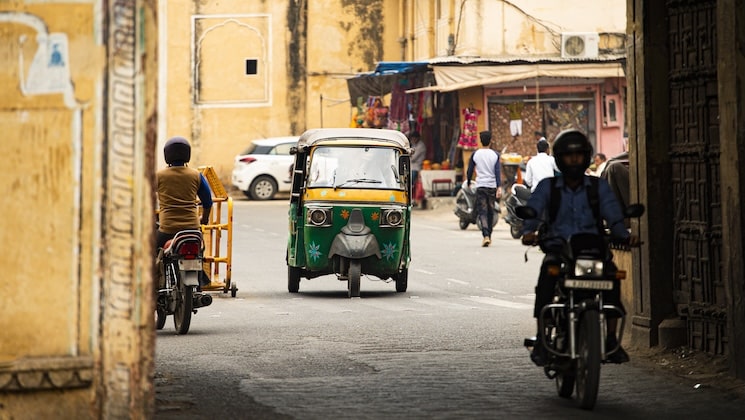
May 2026 data highlights continued growth, with EV expansion in the Class L5 passenger three-wheeler category reaching a record 50.3%, compared with 32% per year earlier.
“Three-wheelers have become the standout electrification success story in India,” Walimbe said. “In many urban markets, electric three-wheelers are no longer niche products. For passenger transport and last-mile delivery applications, they are quickly becoming the default choice.”
The segment’s success stems largely from economics. Three-wheelers operate in high-utilization environments where fuel costs have a significant impact on profitability. Electric drivetrains deliver immediate savings while also reducing maintenance requirements.
Government Policy Accelerates Growth
Policy support continues to play an important role in expanding India’s EV market. The PM E-DRIVE program is channeling more than $1.3 billion into EV incentives and charging infrastructure development.
State-level policies are also helping accelerate adoption. One example is Delhi’s proposed EV policy. It aims to dramatically increase EV registrations by 2027 while expanding support for charging infrastructure and fleet electrification.
At the national level, investments in charging networks are helping to solve one of the industry’s historical barriers. India now has more than 29,000 public charging stations, according to JMK Research & Analytics.
Strong Fundamentals Support Long-Term Growth
Several market drivers suggest continued growth in both the two- and three-wheeler sectors. India’s overall automotive market reached nearly 29.6 million retail vehicle sales in FY2026. EVs accounted for more than 11% of total vehicle retail sales for the first time.
The country has also emerged as the world’s third-largest automotive manufacturer, behind only the U.S. and China. Industry forecasts suggest that annual EV sales could grow from approximately three million units in FY2026 to 11.6 million units by FY2030.
“The combination of favorable economics, increasing charging availability, strong original equipment manufacturer (OEM) participation, and government support creates a powerful foundation for future growth,” Walimbe said. “What we’re witnessing today is the beginning of a much larger transformation of India’s mobility sector.”
Growth Presents Opportunities for Suppliers
For technology providers and component suppliers, the rapid growth of India’s two- and three-wheeler markets creates significant opportunities. EVs have already captured more than 30% of the two- and three-wheeler market in many regions, making them the most successful electric transportation segment in the country. As OEMs accelerate electrification programs and domestic manufacturing expands, demand for motors, power electronics, drivetrain systems, and charging technologies is expected to grow substantially.
“India has reached an inflection point,” said Pradumna Walimbe. “The market is moving from experimentation to scale. Companies that establish strong partnerships and localized supply chains today will be best positioned to participate in the next phase of growth.”
For the global electrification industry, India’s rapidly expanding two- and three-wheeler segments are proving that when economics, infrastructure, and policy align, EV adoption can accelerate far faster than many anticipated.
Summary: Key India EV Market Trends
- EV adoption has reached a new milestone, with electric vehicles accounting for more than 11% of all vehicle retail sales in India for the first time. India sold approximately 2.5 million EVs in FY2026, up 24% year over year.
- Two-wheelers remain the largest EV segment, representing nearly 56% of the EV sales in India. More than 1.45 million electric two-wheelers were registered in FY2026.
- Electric two-wheeler purchases continue to accelerate, reaching 9.2% of monthly two-wheeler sales in May 2026, up from 6.1% a year earlier.
- Electric three-wheelers are India’s biggest electrification success story, with FY2026 growth reaching 58.9% and annual sales exceeding 835,000 units. In many urban applications, EVs are becoming the default choice
- Class L5 passenger EV three-wheelers crossed a major tipping point, achieving 50.3% EV growth in May 2026, the highest ever recorded.
- Rising fuel prices are accelerating EV adoption. Higher fuel costs have increased the total-cost-of-ownership advantage of electric vehicles, particularly in high-usage commercial applications.
- Total cost of ownership is now the primary purchase driver, especially in two-wheelers, passenger three-wheelers, cargo three-wheelers, and last-mile delivery fleets. Lower operating costs outweigh concerns about upfront purchase price.
- Government support remains strong, led by the PM E-DRIVE program, which is investing more than $1.3 billion in incentives and charging infrastructure.
- Charging infrastructure is expanding rapidly, with more than 29,000 public charging stations now installed across India. Additional charger deployment has been approved under PM-DRIVE
- Corporate fleet electrification is creating new demand, with companies such as Amazon, Flipkart, and Zomato committed to transitioning last-mile delivery fleets to EVs.
- The market is shifting from early adoption to scale. EVs have already captured more than 30% of the two- and three-wheeler market in many regions.
Subscribe to our newsletter
Power your decisions with expert electrification and hybrid system insights. Subscribe today.
By subscribing you agree with our privacy policy
Featured
Market Update: Flexible Powertrains & Onboard Energy Move Toward Deployment
Manufacturers keep several powertrain and battery options open, while commercial fleets and railways shift from
Read More
Blog Posts
Market Update: Flexible Powertrains & Onboard Energy Move Toward Deployment
Market Update: Infrastructure, Financing, & Scale Set the Pace for Electrification
Market Update: Truck Manufacturers Seek Complete Transport & Energy Systems
Market Update: Shifts from Components to Complete Systems